Tim Hortons Allergy Menu – Safe Dining Options
Are you searching for the tim hortons allergy menu and clear tim hortons allergen information? The Tim Hortons allergy menu lists items with common allergens. It also warns about cross-contact risks. This is your first step to safe dining and quick choices.
Tim Hortons shares allergen details based on standard recipes and supplier data. These documents, updated in mid-2024 and into 2025, include allergens like milk, wheat/gluten, egg, soy, nuts, shellfish, sesame, mustard, and sulphites. The brand has also added non-dairy choices. Yet, many donuts and baked goods contain milk or have “may contain” statements due to shared equipment.
This article will help you find tim hortons allergy-friendly options. You’ll learn about cross-contact risks and which items are easier to customize. You’ll also know which baked goods to avoid and how menus differ in the U.S. and Canada.
Use the tim hortons allergen information as a planning tool. Then, confirm with staff in-store. Tim Hortons warns that ovens, toasters, beverage machines, and prep surfaces are shared. So, ask staff about preparation and check TimHortons.com or TimHortons.ca for the latest ingredient updates for allergy safety.
Below, you’ll find a clear dietary breakdown covering dairy, gluten, egg, soy, peanuts/tree nuts, fish/shellfish, sesame, and sulphites. Plus, you’ll get actionable tips for ordering. Prices vary by location, and calories are listed on official nutrition pages. This introduction guides you to verified lists for planning your next visit with confidence.
Understanding Tim Hortons Allergen Policy and Cross-Contact Risks
For those with sensitivities, knowing what to expect is key. Tim Hortons has a clear policy on allergens. They explain where ingredients come from and how kitchens work. But, they also warn about the chance of cross-contact.
Think of the tim hortons allergy policy as a guide, not a promise. It doesn’t cover test items, special offers, or local products. They say they can’t promise safety and suggest checking ingredients before you order.
Shared equipment is a big risk. Things like ovens and utensils can spread allergens like milk, nuts, or wheat. Even a small amount of butter or crumbs can mix allergens between foods.
Ask if staff use separate tools and storage for risky foods. Take warnings about “may contain” allergens seriously, like with tim hortons food allergies. Be careful with pre-made sauces and syrups, as they might be mixed with other toppings.
Menus and ingredients can change by country and location. What’s available in Toronto might not be in the U.S. This means different allergen risks for the same menu items.
Because of these differences, the tim hortons allergen disclaimer applies to the country it’s in. Always check with the store you plan to visit. Managers can tell you about specific ingredients and how they’re handled.
- Check the tim hortons allergy policy online and confirm with staff in-store.
- Ask if items are pre-prepared, how utensils are handled, and where syrups are stored.
- Treat “may contain” and cross-contact warnings as valid risk indicators.
| Risk Factor | Examples | What to Ask |
|---|---|---|
| Shared equipment | Toasters, panini presses, ovens | Are separate toasters or cleaning protocols used? |
| Pre-prepared items | Ready-made sandwiches, bottled sauces | Is this item prepared offsite or on-site and how is it handled? |
| Regional variations | Dairy-free milks, syrups, limited-time items | Does this location carry the same ingredients as the country guide? |
There are steps you can take to stay safe with tim hortons food allergies. Talk to the manager before you order, ask for ingredient checks, and avoid items with “may contain” warnings if you’re very sensitive. Asking the right questions and getting help from staff can make your visit safer for you and your family.
tim hortons allergy menu
Want to know about Tim Hortons allergens before you order? This section explains how the menu is set up. It also tells you which allergens are highlighted and where to find the latest information.
How the allergen menu is organized
The menu lists items by category for easy scanning. You’ll see Coffee, Tea & Hot Beverages; Cold Beverages & Additions; and more. Each section clearly marks items with allergens.
Items with “Contain” a specific allergen are noted. Those with “May Contain” traces are due to shared equipment. This makes it easy to compare choices.
Common allergens flagged on the menu
Tim Hortons highlights core allergens. Milk is common in drinks and baked goods. Wheat and gluten are found in bagels, donuts, and sandwiches.
Eggs are in baked goods and breakfast items. Soy is in chocolate and some sauces. Peanuts and tree nuts are in cookies and muffins.
Seafood like fish and shellfish are rare but noted. Sesame is in many bagels. Mustard and sulphites are in sauces and lemonades.
Where to find the most up-to-date allergen and nutrition information
For the latest on Tim Hortons allergens, visit TimHortons.com for U.S. stores and TimHortons.ca for Canada. Both sites have the full allergen matrix and ingredient lists.
Remember, menus and preparation can vary. Always confirm with staff at your store. Use the online pages as a starting point, then verify in person if you have a severe allergy.
| Menu Category | Common Allergens Noted | Contains vs May Contain | Typical Safe Checks |
|---|---|---|---|
| Coffee & Hot Beverages | Milk, Soy | Contains milk in standard drinks; may contain traces from steam wand | Request dairy-free milk and ask about shared steam wand |
| Cold Beverages & Additions | Milk, Soy, Sulphites (some lemonades) | Syrups may contain allergens; labels list “may contain” for equipment | Confirm syrup ingredients and avoid pre-mixed items if necessary |
| Donuts, Timbits & Baked Goods | Milk, Wheat/Gluten, Eggs, Nuts | Many items list “contains” for milk and wheat; some list “may contain” for nuts | Choose items labeled free of specific allergens or skip bakery when risk is high |
| Bagels & Toppings | Wheat/Gluten, Sesame, Milk (butter/cream cheese) | Bagels often “contain” wheat; sesame noted where used | Order plain bagel and request no butter; verify topping prep |
| Breakfast Sandwiches & Wraps | Egg, Milk, Wheat, Soy | Most sandwiches “contain” eggs or milk; cross-contact possible on griddle | Ask for no butter/cheese and confirm grill cleaning practices |
| Lunch: Sandwiches, Bowls, Melts | Wheat, Milk, Soy, Mustard | Prepared sauces often list mustard or sulphites; breads contain gluten | Request sauce on the side and confirm bread ingredients |
| Soups & Sides | Milk, Shellfish, Wheat | Some soups list shellfish or dairy as “contains” | Check the soup label each day and avoid items with seafood if allergic |
| Sauces & Dressings | Soy, Mustard, Sulphites, Milk | Often list allergens in ingredient panels; “may contain” used for shared lines | Ask for sauces on the side and read the posted allergen info |
Safe beverage choices and dairy-free customization
Tim Hortons has many options for those who need dairy-free choices. You can change milks and skip toppings to make drinks safe for those with dairy allergies. Always ask staff about what’s available before you order.
Dairy-free milk options vary by country. In Canada, you can find Chobani Oatmilk, Silk Soymilk, and Silk Almondmilk. In the United States, almond milk, coconut milk, and oat milk are common. When you order, mention the type of dairy-free milk you prefer.
Many espresso drinks can be made without dairy. You can ask for brewed coffee, Americano, lattes, cappuccinos, or iced lattes with a non-dairy milk. Also, ask for no whipped topping or cold foam. Cold Brew and iced capp variants can be made with plant milk if you ask.
Some drinks are made ahead of time and can’t be fully changed. Classic Mocha blends, French Vanilla, and Hot Chocolate may have dairy. You can order coffee with a dairy-free milk and chocolate or mocha syrup for a similar taste.
Check the syrups and add-ins before ordering. Whipped topping and espresso cold foam have milk. Some flavored syrups may also have dairy. Always ask which syrups and flavor shots are dairy-free at your location.
| Item | Typical Dairy-Free Substitute | Notes on Prep | Allergen Flags |
|---|---|---|---|
| Americano | Oat milk / Almond milk | Made to order; safe to substitute | Dairy (if added), cross-contact |
| Iced Latte | Coconut milk / Oat milk | Request no foam and plant milk; check syrup | Dairy (whip/foam), soy (if soymilk) |
| Cold Brew | Almond milk | Often made to order; avoid pre-mixed sweeteners | Dairy (if added), nuts (almond) |
| Mocha-style (custom) | Oat milk + chocolate syrup | Ask staff to mix chocolate syrup with espresso and plant milk | Syrup formulations vary, check local label |
| Hot Chocolate (pre-mix risk) | Custom hot coffee with chocolate syrup | Better to custom order than use pre-mixed hot chocolate | Dairy in pre-mix; cross-contact possible |
When you order, say the milk type and ask for no whipped topping or cold foam. Also, check if seasonal syrups like caramel or cookies & cream have milk. These steps help you enjoy safe drinks at Tim Hortons.
- Ask if a drink is pre-mixed before substituting milk.
- Request dairy-free milk by name: oat, almond, coconut, or soy.
- Confirm which syrups and toppings contain milk at that location.
- Note nut-based milks introduce tree-nut allergens for sensitive diners.
By following these steps, you can enjoy more safe choices at Tim Hortons. Clear requests and checking ingredients help manage allergy risks.
Allergy-conscious hot and cold drink recommendations
Looking for safer drink picks at Tim Hortons? This guide points you to options that lower dairy exposure and reduce cross-contact risk. Use it with the official tim hortons allergy-conscious menu to confirm local availability before ordering.
Black coffee, Americano, and regular brewed coffee are the simplest choices when avoiding dairy. These items have the least handling with milk and are a good starting point for allergy-conscious diners.
Espresso, drip coffee, and steeped tea can also be ordered without milk. Request non-dairy milk where offered, such as oat or almond, to make lattes, cappuccinos, and vanilla or caramel lattes dairy-free. Confirm with staff whether the location lists that item on the tim hortons allergy-conscious menu and if separate steam pitchers are used.
Cold drinks and iced options with safer customization choices
Black Cold Brew and black iced coffee carry lower dairy risk when ordered plain. Iced lattes and iced coffee are workable if you supply a dairy-free milk option and ask for “no whip.”
Vanilla Cold Brew and Roasted Hazelnut Cold Brew can be customized at many stores. Ask whether pre-made flavorings or syrups contain milk. Use the tim hortons cold drinks allergy menu to check flagged items before you order.
Specialty drinks and limited-time items: extra caution for cross-contact
Specialty beverages like Creamy Chills, Frozen Lemonade mixes, and seasonal mochas often contain milk or are pre-prepared. These drinks may show “may contain” milk on allergen lists. Treat these items as higher risk for cross-contact.
Espresso foam, whipped topping, and pre-blended bases contain milk. If you want a specialty flavor, ask whether an item is customizable and if staff can prepare it without dairy components. When in doubt, pick brewed coffee or Americano to minimize exposure.
| Item | Typical Customization | Risk Notes | Allergen Tip |
|---|---|---|---|
| Americano | Black or with dairy-free milk | Low cross-contact if plain | Best low-risk hot choice |
| Regular Brewed Coffee | Black; add non-dairy milk | Low handling with milk | Confirm tim hortons allergy-conscious menu listing |
| Iced Latte | Use oat/almond milk; no whip | Moderate — steaming pitchers may be shared | Request cold, pre-poured dairy-free addition |
| Black Cold Brew | Plain or flavored syrup | Low if syrup is dairy-free | Check tim hortons cold drinks allergy menu for syrups |
| Vanilla Latte (hot) | Non-dairy milk substitution | Moderate — flavoring may contain milk traces | Ask if syrup contains milk |
| Creamy Chill / Seasonal Blends | Often not customizable safely | High — pre-made and dairy-heavy | Avoid if severe dairy allergy |
- Choose black coffee, Americano, or cold brew to lower dairy and cross-contact risk.
- When ordering steamed milk, confirm separate steam pitchers or ask for cold, pre-poured dairy-free milk.
- Skip whipped toppings and espresso foam if you need a dairy-free drink.
- Use the tim hortons cold drinks allergy menu and tim hortons allergy-conscious menu to verify local product notes.
Short questions to ask staff: Is this syrup dairy-free? Are pitchers shared for milk? Is the item pre-prepared? Clear answers help you decide between a safe swap and a higher-risk choice.
Bakery items, bagels and allergen realities
Tim Hortons baked goods are tempting for breakfast or a snack. Knowing which items are safer is important. This guide helps you understand the risks and make better choices.
Which bagels and bread items are often dairy-free or nut-free
Plain-style bagels like Plain, 12-Grain, Everything, and Sesame Seed are often dairy-free. But, always check tim hortons bagel allergens before you order. Jam spreads like strawberry or raspberry are safe choices. Peanut butter is safe but has peanuts.
Baked goods that commonly contain milk, eggs, or tree nuts
Croissants, in plain and filled varieties, usually have milk and wheat. Muffins like chocolate chip, wild blueberry, carrot cake walnut, and banana pecan have milk, egg, and tree nuts. Cookies, dream cookies, and brownies often have milk, egg, and soy. Some have pecans or other nuts. Check tim hortons bakery allergens for details.
Risks with donuts, Timbits, muffins and cross-contact warnings
Almost all donuts and Timbits have milk and wheat. Many also have egg and soy. Tim Hortons uses shared surfaces and fryers for fried and baked items. This increases the risk of cross-contact with peanuts, tree nuts, dairy, and gluten. Always read tim hortons donuts allergen information, paying attention to “may contain” warnings.
| Item | Typical Allergens | Safer Modifications or Notes |
|---|---|---|
| Plain Bagel | Wheat; may contain eggs, tree nuts, sulphites, soy | Order plain with jam; confirm facility nut status using tim hortons bagel allergens |
| Pretzel Bagel (U.S.) | Wheat, milk; may contain egg and soy | Ask staff about cross-contact and separate toasting if needed |
| Croissant (plain/chocolate/cheese) | Milk, wheat, egg | Avoid if dairy or egg allergies are severe |
| Muffins (various) | Milk, egg, wheat, often tree nuts | Not recommended for nut or dairy allergy sufferers |
| Donuts & Timbits | Milk, wheat, egg, soy; may contain tree nuts | High cross-contact risk; consult tim hortons donuts allergen information |
Practical steps can help reduce risks. Ask if bagels are made in a nut-free facility. Say no to butter or cream cheese to avoid dairy. For severe allergies, avoid cases and shared prep zones. Talk to a manager about separate handling.
Breakfast and sandwich options for allergy-sensitive diners
Looking for safe breakfast choices at Tim Hortons? This section guides you through common risks and practical requests. You can make informed choices. Read the short notes and then check specific items with staff.
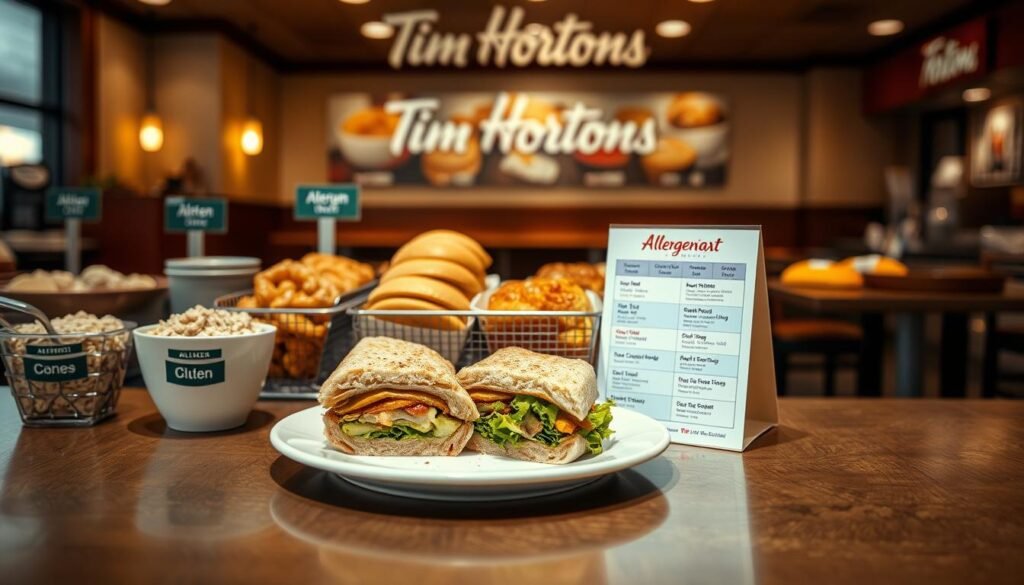
Many breakfast sandwiches include milk, wheat, soy, and egg. Popular items like the Egg & Cheese Homestyle Biscuit and sausage or bacon biscuits list milk and wheat on ingredient panels. Use clear wording when ordering to lower risk.
How to request no butter or no cheese safely
Say the exact phrase tim hortons no butter request when you order. Ask staff to confirm no butter on bread and no cheese added. Also, ask if eggs or bread are cooked on shared surfaces that use butter.
Request that a sandwich be assembled without butter and without cheese. Also, ask that eggs be cooked on a clean pan. If staff cannot confirm a clean surface, pick a different pre-packaged item.
Bagel BELT and sandwich customizations
The Bagel BELT and bagel sandwiches can often be ordered with substitutions to reduce exposure to buttered biscuits. Choosing a bagel instead of a biscuit helps avoid buttered bakery items in some locations.
Use tim hortons sandwich allergen info to check which sandwiches note “no butter/no cheese” options. Confirm whether a bagel will be toasted with butter or on a separate toaster to avoid cross-contact.
Eggs, cooked surfaces and preparation checks
Egg items, such as omelette bites and scrambled eggs, may contain milk and are usually cooked on shared griddles. Ask whether eggs are cooked in butter and whether staff can use a clean surface for your order.
For severe allergies, escalate to a manager and request a fresh pan or packaged alternative. When in doubt, select pre-packaged items that list ingredients to lower cross-contact risk.
| Item | Price | Calories | Vegan/Keto/Gluten-Free Options | Allergens |
|---|---|---|---|---|
| Bagel BELT (ordered no butter/no cheese) | $4.99 | 360 | Not vegan; not gluten-free | Wheat, egg, may have milk, cross-contact with butter |
| Egg & Cheese Homestyle Biscuit (no butter request) | $3.99 | 450 | Not vegan; not gluten-free | Milk, wheat, egg, soy, possible cross-contact with butter |
| Bacon Homestyle Biscuit (no cheese) | $4.49 | 500 | Not vegan; not gluten-free | Wheat, egg, milk traces, pork; cooked on shared surfaces |
| English Muffin Sandwich (no butter/no cheese) | $4.25 | 330 | Not vegan; no gluten-free muffin available | Wheat, milk, egg, soy; may be toasted with butter |
| Pre-packaged Fruit Cup (safe pick) | $2.99 | 80 | Vegan; gluten-free | No common allergens; packaged to reduce cross-contact |
Lunch, wraps, bowls and soups: reading the allergen labels
Tim Hortons has many lunch options that look good. But, it’s important to read labels before you order. This guide helps you spot items with common allergens like milk, wheat, and shellfish.
High-risk items include sandwiches, melts, flatbreads, and crispy chicken. For example, Ham & Cheddar, Roast Beef & Cheddar, Grilled Cheese Melt, and Chicken Bacon Ranch are high-risk. Flatbreads and melts often have cheese and gluten. Crispy chicken recipes may use a batter with milk.
Opt for veggie bowls or wraps without creamy dressings to lower risk. Ask for sauces on the side and swap or omit cheese when possible. Turkey or roast beef sandwiches without cheese are safer but may have wheat. Potato wedges and kettle chips might be dairy-free but could have cross-contact with dairy.
Soups need extra care. Many soups list milk or shellfish as ingredients. Potato Bacon Chowder, Clam Chowder, Cream of Broccoli, and Tomato Parmesan Soup have milk. Spicy Thai Soup has milk and fish or shellfish. Chicken Noodle and Garden Minestrone note milk and egg concerns. Garlic bread and soup buns often have milk and may have “may contain” warnings.
When looking at tim hortons lunch allergen information, focus on the allergen table for soups and sides. Confirm if chili toppings or croutons add soy, milk, or egg. If the risk is too high, avoid items labeled “Contains: Milk” or those with broad “may contain” statements.
For tim hortons wraps allergy menu details, ask staff about dressings, spice blends, and preparation surfaces. Requesting sauces on the side gives you control. When ordering bowls and wraps, specify the swap you want and check ingredients with the printed allergen list.
Below is a compact allergy breakdown for common lunch choices. Use it to compare items and plan safe swaps before you order.
| Item | Price | Calories | Diet Options | Allergens |
|---|---|---|---|---|
| Ham & Cheddar Sandwich | $5.49 | 420 | No-cheese request | Milk, Wheat |
| Roast Beef & Cheddar Sandwich | $6.29 | 450 | No-cheese request | Milk, Wheat |
| Grilled Cheese Melt | $4.99 | 510 | Not suitable for dairy-free | Milk, Wheat |
| Chicken Bacon Ranch Wrap | $6.79 | 640 | Remove ranch; request grilled chicken | Milk, Wheat, Egg |
| Cilantro Lime Veggie Loaded Wrap | $5.99 | 360 | Sauce on side; vegetarian | Wheat, May contain Milk |
| Veggie Bowl (no sauce) | $6.49 | 300 | Vegetarian; dairy-free if sauce omitted | May contain Soy, Wheat |
| Potato Wedges (side) | $2.29 | 230 | Potentially dairy-free | May contain Milk (cross-contact) |
| Kettle Chips (side) | $1.99 | 150 | Often dairy-free | May contain Milk (frying cross-contact) |
| Potato Bacon Chowder (cup) | $3.99 | 280 | Not dairy-free | Milk, Pork |
| Clam Chowder (cup) | $4.49 | 300 | Not safe for shellfish allergy | Milk, Shellfish |
| Cream of Broccoli Soup | $3.89 | 260 | Not dairy-free | Milk, Wheat (may contain) |
| Tomato Parmesan Soup | $3.79 | 240 | Not dairy-free | Milk, Wheat |
| Spicy Thai Soup | $4.59 | 320 | Not suitable for shellfish-free diets | Milk, Fish/Shellfish |
| Chicken Noodle Soup | $3.49 | 200 | Check for egg in noodles | May contain Milk, Egg |
| Garden Minestrone | $3.29 | 210 | Vegetarian option | May contain Milk, Egg |
| Soup Bun / Garlic Bread | $1.99 | 180 | Not dairy-free | Milk, Wheat, Soy |
| Beef Chili | $4.29 | 340 | Confirm toppings | Soy (in seasoning), May contain Milk |
When checking tim hortons soups allergens, review ingredient tags and ask staff about cross-contact. Carry an allergy card that lists your triggers. This makes quick communication easier and safer.
Use the tim hortons wraps allergy menu to request precise changes. Ask for no sauce, no cheese, or grilled options. Clear, brief requests reduce error and help staff follow your needs.
Gluten-free and vegan possibilities at Tim Hortons
Tim Hortons offers simple, safe choices for those avoiding gluten or animal products. You can find a variety of ready-made items and customizable drinks. Always check labels and ask staff about preparation to avoid cross-contact risks.

Which items may be suitable for gluten-free diners and cross-contamination concerns
Tim Hortons does not have gluten-free bakery items. Some packaged snacks and sides might not have wheat, but shared preparation surfaces and fryers pose a risk. Kettle chips, hashbrowns, and some nut-free snacks could work for a gluten-conscious diet if staff confirms handling practices.
Before ordering, check the official allergen lists. The tim hortons gluten-free menu notes many items as “Contains: Wheat” or “May Contain” wheat. For celiac disease, avoid bakery items and anything fried in shared oil.
Vegan-friendly menu items and necessary custom orders
Tim Hortons has clear vegan options when you remove dairy or egg. Plain and flavored bagels, English muffins without butter, and sliced sourdough without butter are good choices. Avocado toast (in U.S. locations), maple oatmeal, and some veggie bowls or wraps without dairy sauces are also options.
Drinks can be vegan with plant milks and careful syrup choices. Ask for almond, oat, coconut, or soy milk and no whipped cream or dairy toppings. When ordering, say “no butter, no cheese” and confirm syrup ingredients to ensure your selection aligns with tim hortons vegan selections.
Limitations: why there are few vegan baked goods and no guaranteed gluten-free bakery items
Most donuts, muffins, croissants, and pastries contain milk, eggs, or butter. Kitchens use shared equipment for baking and frying. This shared use means Tim Hortons cannot guarantee a strictly vegan or gluten-free bakery environment.
Guides and allergen charts may mark items as suitable yet include “may contain” warnings for cross-contact. For strict diets, stick to sealed items and simple drinks, and always verify with store staff. The safest approach for severe allergies or celiac disease is to avoid on-site bakery items and choose packaged or plainly prepared options.
- Quick vegan picks: plain bagel with jam, avocado toast (U.S.), hashbrown, black coffee with plant milk.
- Gluten-conscious picks: kettle chips, potato wedges, select packaged snacks after staff confirmation.
- When to skip: any fried or baked item from shared lines if you need strict gluten-free or allergy-safe food.
| Item | Price (typical US) | Calories | Vegan/Gluten-Free Note | Allergens |
|---|---|---|---|---|
| Plain Bagel + Jam | $1.79 | 280 | Vegan if no butter; not gluten-free | Wheat |
| Hashbrown | $1.29 | 150 | Vegan-friendly; may contact gluten in fry oil | May contain gluten |
| Avocado Toast (U.S.) | $3.99 | 240 | Vegan when prepared without butter or cheese | Wheat (bread) |
| Kettle Chips (single) | $1.49 | 160 | Gluten-free ingredient list; cross-contact possible | No common allergens listed |
| Black Coffee + Oat Milk | $2.39 | 20 | Vegan and naturally gluten-free | Contains oats (may vary) |
Use tim hortons allergy-friendly options data to guide choices. Ask staff for the most current ingredient lists and prep routines. If you need absolute certainty, bring your own packaged food or choose another location with certified gluten-free offerings.
Allergen-specific guides: gluten-free, dairy-free, nut-free strategies
Tim Hortons guests with food sensitivities need clear steps to lower risk. Use the restaurant’s allergen menu and ingredient lists to match items to your needs. Small changes at the register or in customization can make a big difference for safe dining.
How to identify safer choices for dairy-free diets using menu data
Scan the allergen chart for entries that do not list milk in the “Contains” column. Favor black coffee, Americano, brewed coffee and eligible cold brews. Plain bagels with jam, hash browns, kettle chips and certain veggie bowls or wraps without dairy sauces are often good picks. Ask for non-dairy milk where available and request “no whip/no foam.” Avoid pre-prepared drinks like hot chocolate and coffee mocha when they list milk as an ingredient.
Steps to reduce risk for peanut and tree nut allergies when ordering
Check bakery labels for explicit nut ingredients such as pecans, walnuts, or peanut butter and avoid those items. Many items carry “May Contain” warnings because of shared storage or production lines. Ask staff how bakery items are stored and whether separate utensils are used. For peanut allergy, skip peanut butter spreads. For tree nut allergy, avoid coconut-labeled items when processing near tree nuts is possible.
Gluten-conscious ordering tips and which items commonly “may contain” wheat
Look for “Contains: Wheat” on bagels and baked goods. Many limited-time items, lemonades and some drinks may carry “May Contain” wheat warnings. Choose naturally gluten-free sides like kettle chips or potato wedges but confirm if fryers are shared with breaded items. Avoid sandwiches, flatbreads, donuts, muffins and wraps unless a strict gluten-free option is confirmed by staff.
| Item | Price | Calories | Vegan/Keto/Gluten-Free Options | Allergens (Nuts, Dairy, etc.) |
|---|---|---|---|---|
| Brewed Coffee | $1.89 | 5 | Vegan, Keto | None listed; confirm cross-contact |
| Americano | $2.29 | 10 | Vegan, Keto | None listed; confirm cross-contact |
| Plain Bagel with Jam | $2.49 | 280 | Not gluten-free; can be dairy-free | Contains Wheat; may contain traces of nuts |
| Hash Browns | $1.79 | 180 | Vegan option | May contain milk in some regions; confirm |
| Kettle Chips | $1.99 | 150 | Vegan, Gluten-free | May be processed near nuts; check label |
| Veggie Wrap (no sauce) | $4.99 | 320 | Can be dairy-free if ordered without cheese/sauce | Contains Wheat; may contain traces of nuts |
| Hot Chocolate | $2.79 | 210 | Not dairy-free | Contains Milk; may contain soy |
| Blueberry Muffin | $2.39 | 420 | Not gluten-free or dairy-free | Contains Wheat, Milk; may contain nuts |
| Timbits (Glazed) | $0.79 each | 90 | Not gluten-free | Contains Wheat, Milk; may contain nuts |
| Pre-packaged Salad Bowl | $5.49 | 270 | Can be dairy-free without dressing | May contain nuts in toppings; check label |
Practical operational steps to lower cross-contact risk
Ask whether separate utensils, pans or toasters are available. If staff cannot guarantee separation, choose pre-packaged items or eat elsewhere. For severe allergies request to speak with a manager and consider bringing your own utensils or wrappers when needed.
Use the allergen menu and direct questions to staff to confirm ingredients before ordering. These checks support tim hortons dairy-free choices, tim hortons nut-free strategies and tim hortons gluten-conscious ordering while keeping you safer at the counter.
How to order safely at Tim Hortons and what to ask staff
Eating out with allergies requires careful planning. Approach Tim Hortons calmly and clearly. Have the allergen facts on your phone and a list of questions ready. This ensures you can choose a safe option from the tim hortons allergy-conscious menu.
- Does this item contain milk, wheat, egg, soy, or tree nuts?
- Is this item pre-prepared or can it be customized on request?
- Do you have non-dairy milk today (almond, oat, coconut, soy)?
- Are eggs or bread cooked on a shared surface that is cleaned between orders?
- Can staff prepare my item on a clean surface and use clean utensils or new gloves?
- Which syrups and toppings contain milk, nuts, or other common allergens?
Requesting preparation adjustments and verifying ingredient lists in-store
Ask for specific changes like no butter or cheese. Request sauces and dressings on the side. Also, ask staff to use a new glove and change utensils or pans when possible.
Check the allergen chart at the counter. Show the official Tim Hortons ingredient page on your phone to staff. If they can’t answer your questions, ask to speak with a manager.
When to avoid ordering due to high cross-contact risk and how to escalate concerns
Avoid bakery items and products marked “Contains: Milk” or “May Contain” high-risk allergens. Shared fryers, ovens, and prep stations increase the risk, even for safe-looking items.
If a prepared item arrives with undisclosed allergens, return it and ask for a refund. Tell the store manager and document the issue. For severe allergies, choose places with strict handling practices.
If a staff member can’t resolve the issue, go through store management or corporate channels. Reporting mislabeling or repeat incidents improves safety for all. It also helps build a record for future safe ordering at Tim Hortons.
Conclusion
The Tim Hortons allergen menu clearly labels items with “Contains” and “May Contain” flags. This includes beverages, baked goods, breakfast, and lunch items. Milk, wheat/gluten, and eggs are common allergens. Nuts and soy are found in many baked goods and toppings.
This information makes it easy to quickly scan and identify higher-risk items. It helps you make informed choices before ordering.
Tim Hortons offers non-dairy milk and some vegan-friendly options. But, availability can differ between TimHortons.ca and TimHortons.com regions. If you have serious food allergies, take “may contain” warnings seriously.
Always ask staff about how items are prepared. Request no butter or cheese and separate utensils when possible. This can help reduce cross-contact risks.
For the latest information, use the official Tim Hortons allergy menu and nutrition pages. Always check ingredients at the store. With a few simple swaps, like using dairy-free milk, many can find safer options.
If you have celiac disease or severe anaphylaxis, look for locations that can confirm safe preparation. Or, consider alternatives with certified allergen controls.