In-N-Out Menu Calories: Healthier Choices Guide
Are you looking for healthier options at In-N-Out? This guide will help you make better choices. You’ll learn how to pick lower-calorie options for your next burger.
In-N-Out Burger is famous for its simple menu. They’ve been serving burgers, fries, and shakes with straightforward ingredients for over 70 years. This article will break down their nutritional information and explain how different choices affect calorie counts.
Later, you’ll find detailed tables with In-N-Out’s menu items, prices, and calories. These tables also include dietary options and allergens. You can trust the information, as it comes from In-N-Out’s official nutrition facts and independent analyses.
Want to cut calories? Try these tips: choose a single patty, go Protein-Style, skip the spread or cheese, share fries, or swap a shake for unsweetened tea. The guide also covers the benefits of Protein-Style and Animal Style options and how to estimate calories for larger orders.
This introduction prepares you for what’s to come. You’ll get concise calorie tables, practical tips, and a way to estimate calories for custom orders. Use the following sections to compare items, check sodium and saturated fat risks, and find healthier combinations that are also delicious.
Why In-N-Out Menu Calories Matter for Health-Conscious Diners
In-N-Out’s menu is simple, making every choice count. With burgers, fries, and shakes as mainstays, calories and fats are concentrated in a few items. This helps you pick a meal that fits your daily calorie goals.
The menu’s simplicity means less decision-making but fewer healthy options like grilled chicken or big salads. The hand-cut fries are the only vegetable-like side. They’re made in 100% sunflower oil but are high in calories. Knowing the nutrition facts helps balance pleasure with health goals.
Customizing your order can quickly change the calorie count. Adding cheese, extra patties, or Animal Style toppings increases calories and sodium. But, choosing Protein-Style, skipping spread, or dropping a cheese slice can cut calories. The chain lists main nutrition values, but customizations can change these numbers.
Comparing In-N-Out to McDonald’s or Burger King shows both similarities and differences. In-N-Out uses fresh, 100% USDA ground chuck and hand-cut fries without microwaves or freezers. This often means higher quality ingredients. Some items, like the Quad-Quad or Animal Style, have as many calories as a Big Mac or Whopper. Tracking calories helps you choose between quality and portion size.
There are practical ways to enjoy In-N-Out while watching your calorie intake. Order a single patty, go Protein-Style, or skip spread to reduce calories and fat. Save secret-menu treats and shakes for special occasions. Paying attention to nutrition and calorie counts lets you enjoy a classic California burger without sacrificing health.
in n out menu calories
Want to know the calories in In-N-Out’s menu before you order? Check the brand’s website for nutrition facts. It lists calories, fats, and sodium for items like burgers, fries, and shakes. These values help you plan a healthy meal.
Where to find official In-N-Out nutritional information
In-N-Out posts nutrition facts on its website. You can find calorie counts and ingredient lists for main menu items. This is the best place to get accurate nutrition information.
Common gaps in nutrition data (custom orders and secret menu items)
Official data might not cover custom or secret menu items. Items like Animal Style and 3×3 might not have detailed nutrition info. This makes it hard to get complete nutrition facts for every order.
How to estimate calories for not-so-secret or customized items
To estimate calories for custom items, add up the parts. For example, a bun has about 150 calories. Removing it (Protein-Style) saves about 150 calories and 28 g of carbs.
For big secret burgers, like a Quad-Quad, add up the parts. It has four patties, four slices of cheese, one bun, and spread. It’s estimated to have 970–1,470 calories, with high sodium and saturated fat.
Make a DIY calculator to estimate calories. Track values for patty, cheese, bun, spread, and grilled onions. Adjust for your custom order. Remember, restaurant portions can vary.
| Item | Price (typical) | Calories (approx.) | Vegan/Keto/Gluten-Free | Allergens |
|---|---|---|---|---|
| Hamburger | $2.95 | ~390 | Not vegan; Keto if bun removed | Dairy (spread optional), Wheat |
| Cheeseburger | $3.45 | ~480 | Not vegan; Keto if bun removed | Dairy, Wheat |
| Double-Double | $4.95 | ~670 | Not vegan; Protein-Style reduces carbs | Dairy, Wheat |
| 3×3 (estimated) | $6.45 | ~900 | Not vegan; Protein-Style option | Dairy, Wheat |
| 4×4 / Quad-Quad (estimated) | $7.95 | ~1,100–1,470 | Not vegan; Protein-Style option | Dairy, Wheat |
| French Fries (regular) | $1.95 | ~395 | Vegetarian; Not vegan if cross-contact | Possible cross-contact with dairy |
| Animal Style Fries (estimated) | $3.45 | ~650 | Not vegan; higher calories and sodium | Dairy, Wheat (cross-contact) |
| 15 oz Milkshake (estimated) | $3.95 | ~700–900 | Not vegan | Dairy |
| Protein-Style Burger (bun removed) | Varies | Subtract ~150 cal from bun version | Lower carb; better for keto | Dairy (cheese), Possible cross-contact |
| Custom Spread (portion) | Included | ~80–120 | Not vegan | Dairy, Egg |
Calorie breakdown for core burgers and secret-menu burgers
This section breaks down typical nutrition values for In-N-Out favorites. Use these figures to compare items, plan swaps, or estimate your meal when official numbers miss custom orders.
Core burger ranges
A hamburger with spread has about 300 calories, 9–15 g fat, 37 g carbs, and 16 g protein. A cheeseburger is around 370–430 calories, with 21 g fat, 39 g carbs, and 20 g protein. The Double-Double is heaviest, with 610 calories, 34 g fat, 41 g carbs, and 34 g protein.
Protein-style impact
Choosing Protein Style reduces carbs and calories by using lettuce instead of a bun. A Protein-Style cheeseburger has about 270 calories, 19 g fat, 10 g carbs, and 16 g protein. A Protein-Style hamburger with onions is around 240 calories, 17 g fat, 11 g carbs, and 13 g protein. Removing the bun cuts about 150 calories, 28 g carbs, and 280 mg sodium.
Stacked secret-menu items
Adding patties and cheese increases calories, fat, and sodium quickly. A 3×3 (Triple Triple) is about 860 calories, 55 g fat, 39 g carbs, and 52 g protein. The 4×4 (Quad Quad) has wide estimates, from 970 calories and 56 g fat to 1,470 calories and 102 g fat.
| Item | Calories (est.) | Fat (g) | Carbs (g) | Protein (g) | Sodium (mg) |
|---|---|---|---|---|---|
| Hamburger (with spread) | ~300 | 9–15 | 37 | 16 | 370–610 |
| Cheeseburger | ~370–430 | ~21 | 39 | 20 | ~1,070 |
| Double-Double | ~610 | ~34 | 41 | 34 | ~1,660 |
| Protein-Style Cheeseburger | ~270 | ~19 | ~10 | 16 | ~800 |
| Protein-Style Hamburger (with onions) | ~240 | ~17 | ~11 | 13 | ~370 |
| 3×3 (Triple Triple) | ~860 | ~55 | ~39 | ~52 | ~1,880 |
| 4×4 (Quad Quad) | ~970–1,470 | ~56–102 | ~(varies) | ~62–75 | ~1,600–3,160 |
What changes totals
Fat and sodium increase with each added patty, cheese slice, and spread. Swapping spread for mustard or choosing Protein Style cuts calories and carbs. These changes affect in n out burger calories and in n out protein style calories across the menu.
Practical notes
Use the listed ranges when tracking intake from in n out menu calories. For lower calories, choose a single patty, skip spread, or go Protein Style. This reduces carbs and sodium with little impact on protein.
Fries and fries hacks: calories and best practices
Fries are a favorite side at In-N-Out. They can quickly change the nutrition of any meal. This guide covers fry nutrition, why loaded fries are high in calories, and how to make your order lighter while satisfying your cravings.
In-N-Out fries are bigger than small fries at other places. One order has about 360–370 calories, 15 g fat, 52 g carbs, and 6 g protein. Sodium is around 150–250 mg per order.
Portion size is key. In-N-Out fries are meant to be shared. Pairing fries with a burger can quickly add calories. Choosing a smaller side or a protein-style burger is a better option.
Animal Style fries add cheese, spread, and grilled onions. This makes them much higher in calories and sodium. They have about 750–890 calories, over 1,100 mg sodium, and 17–18.5 g saturated fat with extra patties or cheese.
Roadkill-style fries with extra patties and cheese have even more calories. They can have about 890 calories, making them a heavy meal.
Here are some tips to enjoy fries without too many calories.
- Share a single order between two or more people to cut per-person calories in half.
- Ask for fries cooked “light” to reduce oil uptake; this often trims fat and calories slightly.
- Skip Animal Style or request only grilled onions to avoid extra spread and cheese.
- Pair fries with a Protein-Style burger to reduce total carbohydrates while keeping protein up.
| Item | Calories | Fat | Sodium | Notes |
|---|---|---|---|---|
| Standard Fries (one order) | 360–370 | ~15 g | 150–250 mg | Larger portion; designed to share |
| Animal Style Fries | ~750–890 | High (saturated ~17–18.5 g) | ~1,100–1,410 mg | Topped with cheese, spread, grilled onions |
| Roadkill / Extra patties + cheese | ~890 | Very high | Very high | Animal Style plus added patties/cheese |
Use these figures to balance taste and health. Knowing typical in n out menu nutrition and how in n out animal style calories escalate makes it easier to order with intention.
Shakes and beverages: sugar, calories, and better alternatives
Looking for clear guidance on drinks at In-N-Out? Beverages can add a surprising number of calories to a meal. This short guide breaks down shake sizes, soda and tea pitfalls, and easy swaps so you can match your meal to your goals while keeping an eye on in n out menu calories and in n out menu nutrition.
Regular shakes (about 15 ounces) rank among the highest calorie items on the menu. A vanilla 15-ounce shake runs roughly 570–590 calories with about 30–31 g fat, 65–74 g carbs, 10–16 g protein, and near 360 mg sodium. Chocolate and strawberry versions sit slightly higher at roughly 590–610 calories and similar fat totals with about 74 g carbs and 15–16 g protein. These numbers matter when you track in n out menu nutrition for a single meal.
Larger shakes scale up fast. A 20-ounce drink can add roughly one-third more calories, pushing totals near 780–820 calories. A 30-ounce cup may approximate double the regular serving, which can top 1,100–1,200 calories for some flavors. In-N-Out does not publish these larger sizes, yet cup sizing implies linear increases that affect in n out shake calories significantly.
Sodas and sweet tea hide sugars you might miss. Unsweetened iced tea has zero calories for a large 29-ounce serving. A large sweet tea can reach about 260 calories. A 42-ounce Barq’s root beer with no ice may contain roughly 580 calories and near 158 g carbs, mostly from sugar. These drinks can turn a modest burger into a high-calorie meal when you count in n out menu calories overall.
Simple swaps cut a lot of sugar. Choosing water or unsweetened iced tea drops beverage calories to zero. Flavor without sugar is possible with lemon in water or a diet soda on request. Sharing a shake halves the impact. If a warm alternative fits, reported hot cocoa options sit near 130 calories when available.
| Item | Price | Calories | Vegan/Keto/Gluten-Free Options | Allergens |
|---|---|---|---|---|
| Vanilla Shake (15 oz) | $3.45 | 570–590 | Not vegan, not keto, not gluten-free | Dairy |
| Chocolate Shake (15 oz) | $3.45 | 590–610 | Not vegan, not keto, not gluten-free | Dairy |
| Strawberry Shake (15 oz) | $3.45 | 590–610 | Not vegan, not keto, not gluten-free | Dairy |
| Shake (20 oz est.) | $4.50 | ~780–820 | Not vegan, not keto, not gluten-free | Dairy |
| Shake (30 oz est.) | $5.75 | ~1,100–1,200 | Not vegan, not keto, not gluten-free | Dairy |
| Unsweetened Iced Tea (29 oz) | $1.65 | 0 | Vegan, keto, gluten-free | None |
| Sweet Tea (29 oz) | $1.65 | ~260 | Not vegan if sweetener contains additives, not keto, gluten-free | None |
| Barq’s Root Beer (42 oz, no ice) | $2.05 | ~580 | Not keto, vegan, gluten-free | None |
| Water (bottle or cup) | $1.00 | 0 | Vegan, keto, gluten-free | None |
| Hot Cocoa (small, if offered) | $1.75 | ~130 | Not vegan, not keto, not gluten-free | Dairy |
When tracking daily intake, treat shakes as a single-item calorie spike. If you log in n out menu nutrition, note that vanilla is marginally lower than chocolate and strawberry. That difference can matter if you plan multiple meals around calorie targets.
Use these quick rules: pick water or unsweetened tea to save calories, share a shake when you want dessert, or order the smallest shake and sip slowly. Those choices keep beverage calories from dominating the full meal tally.
Protein-Style and low-carb options at In-N-Out
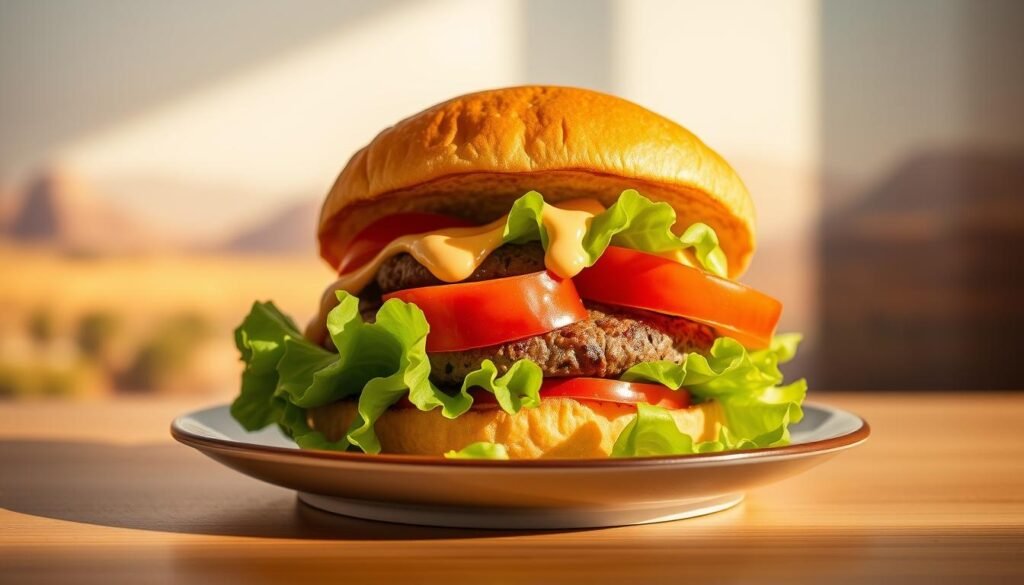
Looking for a lower-carb choice at In-N-Out? Try swapping the bun for a lettuce wrap. This cuts carbs and calories while keeping the beef flavor. We’ll break down nutrient changes, show smart orders, and explain how Protein-Style fits low-carb plans.
How the swap changes nutrients
Switching to a lettuce wrap reduces about 150 calories and 28 grams of carbs. Sodium drops by about 280 mg. Fat and protein from the patties and cheese stay the same.
For example, a Protein-Style hamburger with onions has about 240 calories, 17 grams of fat, 11 grams of carbs, and 13 grams of protein. A Protein-Style cheeseburger has roughly 270 calories, 19 grams of fat, 10 grams of carbs, and 16 grams of protein.
Best low-carb orders to consider
- Order a Protein-Style hamburger or cheeseburger with ketchup and mustard (skip spread) for lower calories and more protein.
- For higher protein, try a Protein-Style Double-Double or a 3×3; expect calories and sodium to increase with extra patties.
- Avoid fries and shakes. Pair your burger with unsweetened iced tea or water to reduce added sugars and calories.
How Protein-Style works for keto and low-carb diets
For keto followers, Protein-Style burgers with cheese and no bun fit macros well. Watch ketchup amounts and any tomato slices that add carbs. Low-carb dieters can use the same approach: choose lettuce-wrapped burgers, avoid fries, and pick unsweetened drinks.
Diabetes-friendly considerations
Protein-Style orders lower carb load and raise protein, helping control blood sugar after a meal. Monitor sodium and saturated fat when you pick larger burgers or extra cheese. Skip milkshakes and sugary beverages to keep the meal aligned with in n out menu nutrition goals.
| Item | Estimated Calories | Carbs (g) | Protein (g) | Diet Notes |
|---|---|---|---|---|
| Protein-Style Hamburger | 240 | 11 | 13 | Low-carb, good keto option |
| Protein-Style Cheeseburger | 270 | 10 | 16 | Higher fat, but low carb |
| Protein-Style Double-Double | ~460 | ~12 | ~34 | High protein, watch sodium |
| Small Fries (avoid) | ~330 | 42 | 4 | Not low-carb |
| Unsweetened Iced Tea | 0–5 | 0 | 0 | Best beverage for low-carb plans |
Practical caveats
Cross-contamination risk exists for people with celiac disease. In-N-Out provides nutrition facts but does not guarantee a gluten-free kitchen. For strict allergy or medical needs, ask for ingredient details at the counter and consider preparation risks.
Using Protein-Style choices is an easy way to lower calories while keeping the classic In-N-Out taste. Adjust toppings, skip high-carb sides, and pick drinks with no sugar to match keto, low-carb, or diabetes-friendly plans.
Lower-calorie ordering strategies and simple swaps
Making smart choices at the counter can help you eat less without losing flavor. Small changes can cut down on fat and sugar. Also, controlling portion sizes keeps your meal satisfying and balanced.
Sauce and condiment swaps
Ask for yellow mustard and ketchup instead of the special spread. The spread has about 80 calories and 9 g fat per serving. This swap can save about 80 calories and reduce fat in your burger.
Requesting light spread or getting it on the side helps you control how much you use. This small change can make a big difference in the nutrition of your meal.
Cheese and patty choices
Skipping cheese can save 50–80 calories per slice. Choosing a single patty instead of a Double‑Double also saves calories.
A single hamburger with mustard and ketchup has about 300 calories. A Protein‑Style hamburger can be around 200–240 calories, depending on toppings. These swaps can lower the calorie count of your burger.
Ask staff to cut the burger in half. Sharing or eating one half now and one later helps control portions.
Combining items for a balanced, lighter meal
Pair a Protein‑Style cheeseburger (~270 cal) with shared small fries and unsweetened tea for a modest meal. If two people split fries, that’s about 185 calories each, plus 0 calories from tea.
For higher protein with controlled carbs, try Double Meat with only ketchup and mustard (≈410 cal). This keeps protein high while staying under many fast‑food calorie totals.
Practical tips to reduce sodium and saturated fat
Request no added salt on patties to lower sodium. Skip Animal Style or extra cheese to limit saturated fat. Avoid large shakes when you want to keep the meal lean.
| Item | Typical Calories | Swap Option | Effect on Calories |
|---|---|---|---|
| Hamburger (standard) | ≈380 | No spread; mustard & ketchup | −80 kcal (≈300 kcal total) |
| Protein‑Style hamburger | ≈200–240 | Keep toppings minimal | Lowest bun-free option |
| Cheeseburger | ≈480 | Skip cheese; single patty | −50–80 kcal per slice; major cut with single patty |
| Small fries (shared) | ≈370 | Split between two | ≈185 kcal per person |
| Double Meat (ketchup & mustard) | ≈410 | No spread, no cheese | Higher protein, controlled calories |
- Order items on the side to control portions.
- Skip extra salt and extra cheese to limit sodium and saturated fat.
- Choose unsweetened drinks to keep total in n out menu nutrition low.
Calories, fat, and sodium: what to watch for
When you look at in n out menu calories and nutrition, don’t just focus on total calories. Sodium and saturated fat can make a meal too high. Here are some tips to help you make better choices while enjoying your meal.
High-sodium items and how a single burger can impact daily sodium limits
Many In-N-Out burgers have a lot of sodium. A Double-Double can have up to 1,660 mg. Protein-style cheeseburgers have about 800 mg. Quad-Quad or 4×4 burgers might have over 3,000 mg, which is way over the 2,300 mg limit for most adults.
Fries have less sodium, usually 150–250 mg. This can help balance your meal. Keep an eye on in n out burger calories and sodium to avoid hidden dangers.
Saturated fat concerns in larger secret-menu burgers and shakes
Bigger secret-menu burgers can quickly increase saturated fat. Quad-Quad burgers might have 34–37 g of saturated fat. A 15-ounce shake can add about 19–20 g of saturated fat.
High saturated fat can harm your heart. If you’re watching your heart health, see 3×3 and 4×4 burgers as rare treats, not regular meals.
Balancing protein needs with saturated fat and sodium risks
Big burgers offer a lot of protein, like 62–75 g in a 4×4. But this protein comes with a lot of calories, saturated fat, and sodium. For many, a Double Meat without spread is a better choice for protein with fewer extras.
Smart swaps can reduce risks: go for Protein-Style, skip the spread, choose single patties, and pick unsweetened drinks. These changes can lower in n out menu calories and reduce sodium and saturated fat without losing flavor.
| Item | Estimated Calories | Estimated Sodium (mg) | Saturated Fat (g) | Notes |
|---|---|---|---|---|
| Hamburger (single) | ≈390 | ≈480 | ≈8 | Lower sodium than multi-patty options |
| Cheeseburger | ≈480 | ≈620 | ≈12 | Moderate protein, watch cheese if limiting fat |
| Double-Double | ≈670 | ≈1660 | ≈21 | High sodium; check in n out burger calories for meal planning |
| Protein-Style Cheeseburger | ≈520 | ≈800 | ≈13 | Bun removed lowers carbs; sodium remains notable |
| Quad-Quad (4×4) estimate | ≈1,040–1,200 | ≈2,800–3,160 | ≈34–37 | Very high sodium and saturated fat; occasional treat only |
| Small Fries | ≈320 | ≈150–250 | ≈3 | Relatively low sodium for a fry; portion control advised |
| 15-oz Shake | ≈650–750 | ≈150–200 | ≈19–20 | High saturated fat and calories; share or skip |
- Check in n out menu calories together with sodium and fat for a full picture.
- Choose Protein-Style or single patties to lower carbs, calories, and sodium.
- If protein is the goal, prefer Double Meat without spread instead of secret-menu giants.
- For heart health or hypertension, limit shakes and multi-patty burgers.
Special diets and allergen information at In-N-Out
When you order at In-N-Out, it’s important to think about the calories and nutrition. This is even more true if you have a special diet. The chain offers simple swaps, but shared prep areas can be a risk for cross-contact. Here’s some advice before you place your order.
Gluten considerations and cross-contact guidance
Choosing a Protein-Style burger can help lower your gluten intake. This option removes the bun, cutting down on carbs. In-N-Out lists items without wheat, but they don’t claim to be gluten-free.
Shared grills, fryers, and prep areas mean there’s a risk of cross-contamination. If you have celiac disease, talk to the staff. Ask about their cleaning practices and consider avoiding certain items unless you’re sure they’re safe.
Vegetarian and vegan possibilities and calorie trade-offs
In-N-Out doesn’t have a plant-based patty. But, you can get a grilled cheese or a “wish burger” without meat. The buns have eggs, so they’re not vegan.
Fries are cooked in sunflower oil, making them vegan and vegetarian-friendly. But, cheese and shakes have dairy, which is a problem for those sensitive to lactose. Going meatless cuts fat by about 10 g and calories, but it also reduces protein by about 13 g. Think about your protein needs when choosing.
Allergen list overview and best practices for sensitive diners
In-N-Out says it doesn’t have peanuts, tree nuts, sesame, shellfish, or fish in its menu. But, it does have dairy in cheese and shakes, wheat in buns, egg in buns, and soy in some ingredients.
For those with allergies, review the allergen chart before ordering. Ask staff about cross-contact and request clean prep where possible. Choosing Protein-Style and asking for clean surfaces can help. Just remember to keep an eye on calories and nutrition for balanced meals.
| Item | Price | Calories | Dietary Notes | Allergens |
|---|---|---|---|---|
| Protein-Style Hamburger | $2.80 | Approx. 240 | Low-carb option; reduces carbs and calories | Egg (bun alternative used on clean surface), Soy |
| Grilled Cheese | $2.25 | Approx. 450 | Vegetarian; higher calories from cheese | Dairy, Wheat, Egg, Soy |
| Fries | $1.60 | Approx. 395 | Vegan-friendly; cooked in sunflower oil | Prepared on shared equipment; Soy possible |
| Vanilla Shake (small) | $2.85 | Approx. 570 | High in dairy and sugar | Dairy |
| Cheeseburger (single) | $3.15 | Approx. 480 | Standard menu item; moderate protein | Dairy, Wheat, Egg, Soy |
Estimate tool ideas and how to calculate your meal’s calories
Want to quickly figure out your In-N-Out meal’s calories and nutrients? A DIY calculator can help. It lets you build a meal and estimate calories using In-N-Out’s values. This way, you can make better choices and control your portions.
Begin with basic components. Use the chain’s patty calories if available. If not, assume one beef patty is about 250–300 calories. A bun is around 150 calories with 28 g carbs. American cheese adds 50–80 calories per slice. Spread is about 80 calories per serving. Grilled onions, ketchup, and mustard add small amounts.
Build your burger by adding components. For example, add one patty, bun, cheese, and spread to estimate a single burger. Compare it to the Double-Double for scaling up to 3×3 or 4×4 orders. This keeps your math consistent.
Estimate fries and hacks the same way. Start with base fries, about 370 calories. Add cheese for +50–80 calories. Add spread or extra patties for Roadkill or Animal Style. Doubling patties adds about 300–400 calories.
Controlling portions lowers calories per person. Split fries or a shake, choose a single patty, or request a burger cut in half. Pairing a small item with water or unsweetened tea also reduces calories.
Practical tool ideas:
- Create a spreadsheet with selectable rows for patties, cheese, bun on/off, spread yes/no, and sides.
- Use simple formulas that sum calories, fat, carbs, protein, and sodium from chosen components.
- Add quick presets for common secret-menu builds like 3×3 and 4×4 that reference Double-Double data for scaling.
When official numbers are missing, combine component estimates and cross-check against published items. For example, estimate a 4×4 as 4×patty + 4×cheese + bun + spread + veggies. Compare to two Double-Doubles to validate totals. This approach keeps estimates aligned with In-N-Out’s actual menu patterns and the broader in n out menu nutrition landscape.
Use the table below as a starting reference for calculator inputs. Adjust values to match the most recent in n out nutritional information you can find.
| Item | Typical Estimate (Calories) | Fat (g) | Carbs (g) | Protein (g) | Allergens |
|---|---|---|---|---|---|
| Beef patty (single) | 275 | 22 | 0 | 18 | Dairy (cross-contam possible in prep), Beef |
| Bun | 150 | 2.5 | 28 | 5 | Wheat, Soy |
| American cheese (slice) | 60 | 5 | 1 | 3 | Dairy |
| Spread (serving) | 80 | 8 | 2 | 0 | Egg, Soy |
| Grilled onions (small) | 15 | 0 | 3 | 0 | Onion |
| Fries (regular) | 370 | 18 | 48 | 4 | Soy (oil) |
| Cheese on fries | 60 | 5 | 1 | 3 | Dairy |
| Shake (small estimate) | 640 | 22 | 92 | 14 | Dairy |
| Extra patty (per) | 275 | 22 | 0 | 18 | Beef |
| Ketchup & mustard (combined) | 15 | 0 | 4 | 0 | Mustard (mustard seed) |
Best and worst menu choices summarized for quick decisions
When you’re at In-N-Out, pick wisely. Match your goals with the menu facts. This guide will help you make quick, smart choices.
Healthier picks
The Protein-Style cheeseburger is a good choice. It has about 270 calories, 19 grams of fat, 10 grams of carbs, and 16 grams of protein. It’s a low-carb option that keeps the flavor.
For a lower-calorie option, try the Protein-Style hamburger with ketchup and mustard. It has 200–240 calories. Ask for no salt on the patty to cut down on sodium. These choices help you eat less carbs and calories.
A hamburger with ketchup and mustard has about 300 calories, 9 grams of fat, 37 grams of carbs, and 16 grams of protein. Sharing small fries with someone else can reduce your calorie intake.
Drink unsweetened iced tea or water to keep your calorie count down. It’s a great way to manage your meal calories.
Items to avoid or treat sparingly
The 4×4 is very high in calories, fat, and sodium. It can have over 1,000 calories. Treat it as an occasional indulgence if you’re tracking calories.
Animal Style and Roadkill fries are also high in calories and sodium. They have melted cheese, spread, and grilled onions. They should be eaten sparingly.
Milkshakes have about 570–610 calories. Large sizes can easily exceed 1,000 calories when paired with a burger. Enjoy them in moderation.
Macro-minded picks
The 4×4 and 3×3 are high in protein. A 4×4 has about 62–75 grams of protein. They’re good for those needing a lot of protein or during a calorie surplus.
The Double Meat with ketchup and mustard has about 410 calories and 26 grams of protein. It’s a good choice for active days and tracking calories.
For quick choices, pick items from the healthier picks section. They help keep your calorie intake steady. Opt for extra patties but remove spread and skip fries or shakes to balance protein and calories.
| Item | Price (typical) | Calories (est.) | Diet Options | Allergens |
|---|---|---|---|---|
| Protein-Style Cheeseburger | $3.50–$4.50 | ≈270 | Low-carb, Gluten-reduced if tolerated | Dairy (cheese), Beef |
| Protein-Style Hamburger (no spread) | $2.50–$3.50 | ≈200–240 | Low-carb, Lower sodium on request | Beef |
| Hamburger (ketchup & mustard) | $2.30–$3.00 | ≈300 | Lower-calorie if single patty | Wheat (bun), Beef |
| Small Fries (shared) | $1.80–$2.50 | ≈360–370 per order | Vegetarian, not vegan if cross-contact | Cooked in shared oil |
| Animal Style Fries | $3.50–$5.00 | ≈750–890 | Treat sparingly | Dairy (cheese), Egg in spread |
| Milkshake (15 oz) | $3.00–$4.50 | ≈570–610 | Not suitable for low-calorie plans | Dairy |
| Double Meat (no spread) | $3.80–$5.00 | ≈410 | Higher-protein, moderate calories | Beef |
- Tip: Track in n out menu calories by removing spread, choosing protein-style, and skipping sugary drinks.
- Tip: If you need lots of protein, add patties but balance by removing fries or shakes to control totals.
- Tip: For fast choices, pick items listed under healthier picks to keep daily calories steady.
Conclusion
In-N-Out makes burgers and fries fresh with simple ingredients. But, adding common items can increase calories. Use the official nutritional info as a starting point. Then, adjust for secret-menu items and customizations.
Swapping to Protein-Style and skipping spread can cut calories and carbs. Choose unsweetened drinks and share fries or shakes. Cutting burgers in half also helps manage portions.
Make a quick DIY calculator for custom orders. Use values for patties, buns, cheese, and sauce. This way, you can enjoy In-N-Out more often while keeping your nutrition goals in mind.